
Defilers Are Going to Keep Getting More Expensive Until 40K Fixes Overwatch

If we're right about where this one is headed, Overwatch will be the reason Defilers aren't done getting more expensive in your 40K lists. Whether you're a casual enthusiast or a aspiring competitor — let's explore where Defilers are and how they got there.
Defilers and The Competitive Warhammer 40,000 Context
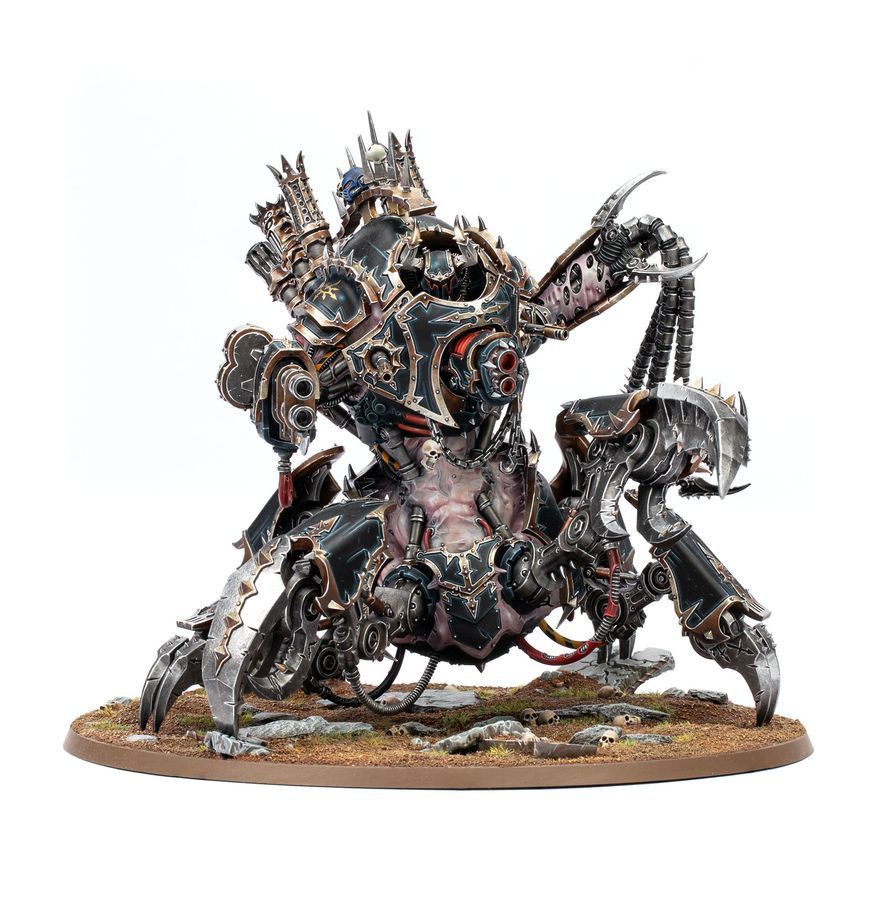
Games Workshop gave themselves an uphill battle when they released the new Defiler kit — it's absolutely laden in weaponry, it fulfills a particular niche that World Eaters, Emperor's Children, and Death Guard simply couldn't previously fulfill, and it's very simply a big chunky boi — but that doesn't mean that the chassis is inherently impossible to balance.
But we've got a problem — the Defiler just keeps getting more and more expensive.
We're now up almost 100 points (plus duplication tax) per Defiler since its release at the end of 10th edition. Starting at approximately 250 points across the different chaos factions, and now sitting around 330 for a competitive weapon loadout, depending on your chosen faction.
Points Cost: The Chaos Defiler As Things Stand
In terms of points costs, this is where things sit for a Defiler at time of writing (August 1st 2026), broken down by Faction:
For Defilers belonging to Death Guard, Emperors Children, Thousand Sons, Chaos Space Marines Factions:
DG, EC, TS, CSM Defiler (330 points)
• 2x Excruciator cannon
1x Hades battle cannon
1x Hades lascannon (15 points)
1x Heavy reaper autocannon (15 points)
1x Shearing claws
This loadout increases to 370 for your second and third, meaning three Defilers (with the above loadout) will set you back a cool 1070 points in either Death Guard, Emperors Children, Thousand Sons, or diet Chaos faction types.
For World Eaters, things are a little cheaper, coming in at 270 points base, and 15 point per-competitive-weapon upgrade:
World Eaters Defiler (300 points)
• 2x Excruciator cannon
1x Hades battle cannon
1x Hades lascannon (15 points)
1x Heavy reaper autocannon (15 points)
1x Shearing claws
This loadout increases to 340 for your second and third, meaning three Defilers (with the above loadout) will set you back a blood-curdling 980 points in your World Eaters lists.
Rules: The Faction-Specific Datasheet Abilities
Where the defilers begin to diverge are datasheet abilities, specific faction army rules, and detachment-specific rules. So far in 11th edition, Games Workshop haven't been shy about meaningfully adjusting the datasheet abilities across the factions.

Death Guard | Barrage of Filth: In your Shooting phase, after this model has shot, select one enemy unit hit by one or more of those attacks. Until the end of the phase, that unit cannot have the Benefit of Cover.
Weapons wielded by a Death Guard Defiler also benefit from Lethal Hits.
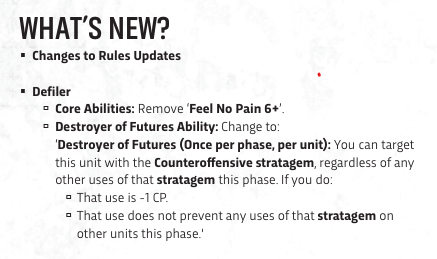
Thousand Sons | Destroyer of Futures (Once per phase, per unit): You can target this unit with the Counteroffensive stratagem, regardless of any other uses of that stratagem this phase. If you do:
That use is ‑1 CP.
That use does not prevent any uses of that stratagem on other units this phase.’
Emperor's Children | Revel in Desecration: Each time this model makes an attack that targets an enemy unit that is not below Half-strength, add 1 to the Hit roll.
World Eaters | Unleash Wrath: At the end of your opponent’s Movement phase, you can select one enemy unit that was set up on the battlefield within 12" of this model; this model can then either:
Shoot at that unit, but only if it is an eligible target.
Declare a charge. This unit must end that charge move engaged with the enemy unit you selected (note that even if this charge is successful, this unit does not receive any Charge bonus this turn).
Weapons wielded by a World Eaters Defiler also benefit from Rapid Fire X.
Not all of these rules will be relevant for the purposes of our discussion, but they are a useful reference point. Some of these rules (like the Thousand Sons ones) have actually been toned down in tandem with prices going up. They are part of the reason why Defilers are where they are right now.
The Obvious Commercial Caveat
Ok, so you don't have to have been around the block to understand that Games Workshop will push a new centrepiece kit hard. So the original inclusion cost at launch was too low and the duplication rate in lists was going to be high. In other words, it wasn't rare to see, and still sometimes see, two or three Defilers in competitive Chaos lists. It's not unusual to see new kits dominate the meta like this.
That's the nature of the hobby we're in, so let's put that part of the discussion aside.
But now that we're four months (again, at time of writing) since it was originally released, we expect to see, and admittedly have seen, Games Workshop attempt to address the dominance of the Defiler kit in lists across the tournament and local meta.
However, so far, Games Workshop appears to be treating the symptom instead of the core problem that makes the Defiler so notoriously effective. Right now, the real conversation should be less about whether the Defiler deserves another points increase and more about why playing against it feels bad.
Spiking Responses: Defiler Overwatch Touches on The Real Pressure Point in 40K
Without even considering overwatch, the defiler (and many other units in a similar position in 40K) is an incredibly effective ranged piece. The main reason for this is that it's just a big unit that can bring a lot of firepower to bear in a single activation. On top of this, the Defiler specifically has access to Heavy Reaper Autocannons — competitive lists often see any Defilers utilising two of these considering they provide Critical Hits with Sustained 1. You can then amp this up with Lethal Hits when included in a Death Guard faction list, or Rapid Fire in a World Eaters faction list for more attempts to fish for those valuable 6-ups.
Combine the oppressive volume of fire with the simple fact that Critical Hits are a thing, the Defiler becomes a very scary prospect for any opponent. Where scary becomes oppressive, is when this single large unit is then targeted with the Overwatch stratagem, allowing this already scary unit to activate at the end of the opponents shooting phase.
Now, this normally isn't too much of an issue because Overwatch is conducted using the Snap Shooting rules. Normally, this would mean that your overwatching unit is far less effective since it's only hitting on a 6+ regardless of other factors.
Unless, it's decked out in Critical Hit effects...
Like the Defiler.
The Systemic 40K Issue: Defiler Overwatch Snap Shooting & Critical Hit Effects
Critical hits represent moments where a slim chance can meaningfully change the outcome of an attack. This is part of the expectation when a direct all-out attack takes place in a player's own shooting phase. When these effects are layered onto snap shooting, however, the entire point of snap shooting starts to lose its meaning.
Snap Shooting is a mechanic that's meant to represent degraded, opportunistic fire — but since it retains access to the same high-reward spikes, it starts becoming problematic in tandem with Critical Hit effects. This can result in nasty surprises, where an opponent had the audacity to believe he had the relative safety of their own turn in which to complete a maneuver.
This is where the feels-bad hits.
Chaos Defilers of most varieties have access to one or more Critical Hit effects — either natively via the Heavy Reaper Autocannons, or via a tricky combination of layered rules like Heretic Astartes Dark Pacts, or honest built-in faction bonuses like Lethal Hits for Death Guard.
For a unit like the Defiler, which already asks difficult questions through its presence alone, this rules interaction adds up to a problem. The unit suddenly changes from challenging to awkward, from powerful to outright oppressive. Especially when opponents are forced to play around a reactive attack that's completely disproportionate to the supposed inaccuracy implied by its name.
'Snap Shooting'
Why Snap Shooting Should Not Generate Critical Hits
If Games Workshop were to remove critical hits from snap shooting, a large part of the tension melts away.
The change would preserve Overwatch as a useful defensive and positional tool — units could still threaten certain movement choices, they could still do chip damage, influence staging, and punish recklessness. What they could not do is convert an inherently limited form of fire into an inherently disproportionate one.
More importantly, it would solve the right problem at the right level. Instead of endlessly re-pricing every unit that happens to benefit unusually well from the interaction, Games Workshop could narrow the rule creating the issue in the first place.
The Defiler Would Be Easier to Cost
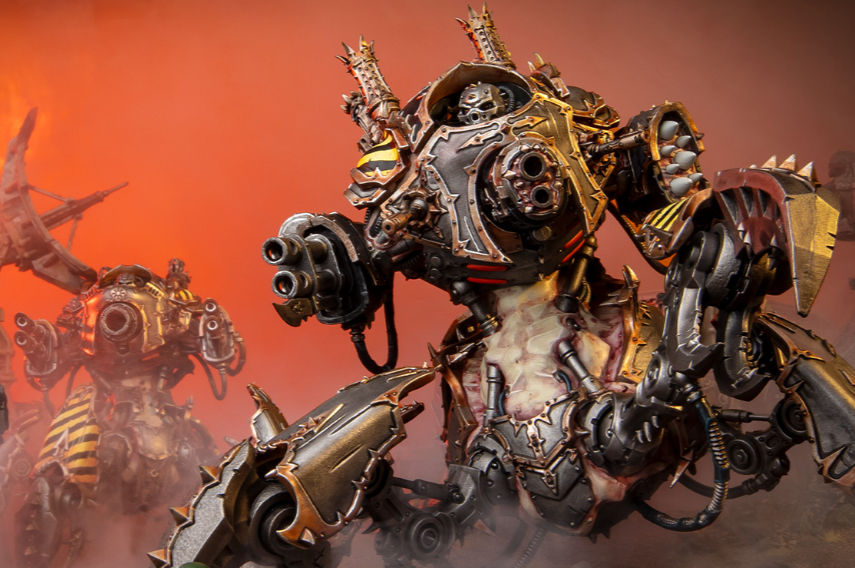
This is the main issue we're trying to solve — pricing for large units that benefit disproportionately from Overwatch/Snap Shooting due to layers of Critical Hit effects.
Once the spike potential is trimmed, the Defiler becomes far easier to evaluate as a complete package. You can look at its mobility, resilience, output, footprint, and battlefield role without constantly having to price in the possibility of snap-shot criticals skewing the whole thing.
This would give us healthier outcomes on both sides of the table. Chaos players get a unit that can be costed around its actual battlefield role instead of a fringe but highly influential interaction. Opponents get a clearer expectation of what the model can do when they move around it. And Games Workshop gets to stop revisiting the issue with blunt points updates alone.
Brush & Bolter Expects More Points Hikes
If nothing changes in the rules interaction layer, then the likely outcome is fairly obvious.
The Defiler will keep being assessed through the lens of what it can do at its spikey ceiling, not what it looks like at actual baseline, and more points increases will inevitably come.
That may suppress usage over time, but it does not necessarily improve the underlying balance. It just pushes the unit further toward being overpriced in fair contexts while remaining suspect in the exact situation that caused the concern in the first place.
At that point it's a feels-bad situation for the Defiler owner and the opponent playing against it.
In Numbers: Defiler Overwatch & Snap Shooting
Let's run some numbers on the default competitive loadout:
Defiler
2x Excruciator cannon
1x Hades battle cannon,
2x Heavy reaper autocannon
If we run this loadout through Snap Shooting via the Overwatch stratagem vs some likely targets, we can see the stark difference that Critical Hits make. Factoring out cover and other external layers like Feel No Pain, we can see the following approximate damage-after-saves outputs:
Target | DG Crits | DG Wo/Crits | CSM Crits | CSM Wo/Crits |
T3 / 4+ | 10-11 | 7-8 | 11-12 | 8-9 |
T4 / 3+ | 8-9 | 5-6 | 8-9 | 5-6 |
T9 / 3+ | 6-7 | 3-4 | 7-8 | 3-4 |
T10 / 2+ | 4-5 | 1-2 | 4-5 | 2-3 |
This is assuming that infantry come in squads of 5 for the purpose of blast, and the CSM Defiler's access to reroll 1's to Wound is active. Obviously there's no way we can account for the variety of circumstances, or the nuance of different rules interactions — but it paints a vivid picture of just how extra Critical Hits effects can be with snap shooting.
In the case of Heretic Astartes Defiler Overwatching against a T9/3+ vehicle target, the expected damage after saves is 7+. If the Defiler wasn't benefiting from Critical Hits for this Snap Shooting attack, the damage would be approximately halved.
So this is where we think the real issue is. If Defilers keep becoming more expensive, it'll be because of the stacking effects of Critical Hits during Snap Shooting. By remove Critical Hits from snap shooting, we can demonstrably see the numbers fall back to a much more reasonable place. One that will see the un-interactive unit feel a lot more approachable.

Final Cogitations
The clean route to progress isn't to jack Defiler points costs until it's beyond the reach of a trusty barge pole. The answer is to remove critical hits from snap shooting and then see what the unit/meta actually looks like once that interaction is addressed.
There's mechanical and thematic grounds for this change. Mechanically, Critical Hits makes Overwatch feel really bad, and this is amplified by the crit-laden datasheet of the Defiler. Thematically, should we really allow desperation/reactive shooting to be able to score such critical hits? Critical wounds would stay in place in all instances.
The Defiler may be the current focus for the meta, but the principle is broader than one datasheet.
Regardless, the main source of the issue isn't necessarily the datasheet or the kit — it's the rules interaction between Snap Shooting and Critical Hits. This is where the balance needs to be addressed. Otherwise, the points just keep ramping up, and the real problem goes untouched.
Thoughts or opinions? Drop them below and let's start a conversation!
Until next time! Jamie M



Comments